Embroidery creates a stitched decoration; screen printing applies an ink design. Choose by garment construction, logo detail, decoration area and the provider’s complete quote. A small polo logo and a large event-shirt illustration ask different things of the production method.
Start with what the design must retain
List the details that cannot change: company lettering, a small tagline, a color relationship or a photograph. Embroidery may require simplified detail at a small size. Screen printing still needs artwork suitable for the intended colors and print area. Ask the provider to identify changes before quoting the final design.
A logo that is legible across a laptop screen may lose small lettering when stitched on a chest. Madeira’s design and lettering guidance discusses limitations when reducing embroidery designs. Request a stitched sample at the intended size if small text is important.
Match the decoration to its use
| Decision | Embroidery | Screen printing |
|---|---|---|
| Result | Visible thread texture and stitched shapes | Printed ink coverage and a finish dependent on the ink system |
| Small detail | Ask whether text and gaps stay clear in thread | Ask whether artwork and screens can retain the intended detail |
| Large coverage | Discuss weight, stiffness, stitches and comfort | Discuss ink coverage, feel and placement |
| Preparation | Digitizing for the garment and finished dimensions | Artwork preparation, separations and screen setup as applicable |
| Approval | Layout plus a sew-out where needed | Layout plus a print sample where needed |
Use the garment to narrow your options
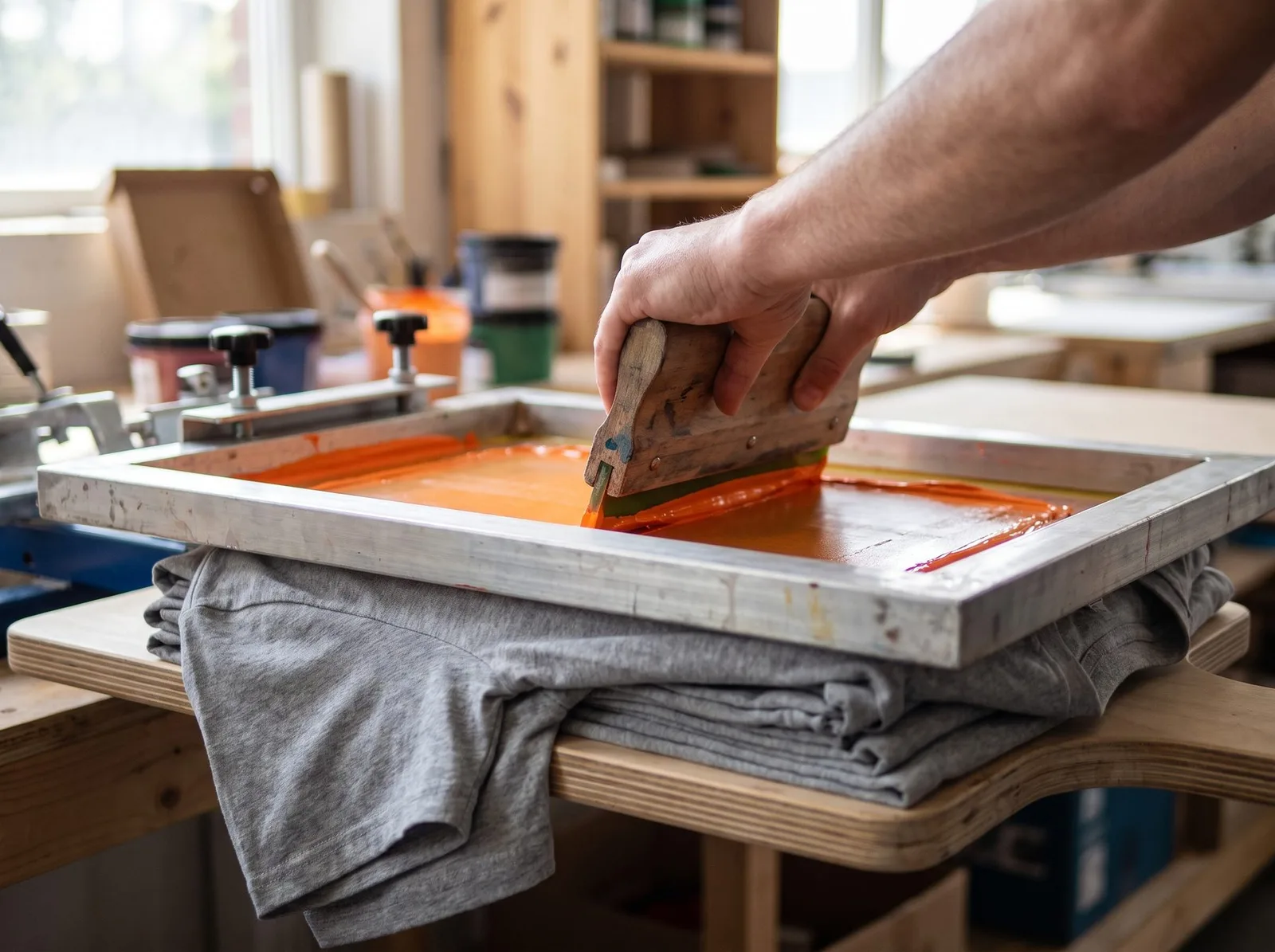
For a staff polo with a small company mark, start by asking about embroidery and the garment’s suitability for stitching. If your logo contains tiny type, discuss simplifying it or a print alternative. For an event T-shirt with a large back illustration, start by comparing printing methods and ask what reproduces the image at that size.
A structured cap needs its own placement and seam assessment. Do not assume an approved polo stitch file can be reused unchanged. The embroidered hat page gives a more specific request path. These situations are planning examples, not claims of orders completed by this service.
Which costs less?
Ask for the same quantity, garment and decoration locations. Embroidery can be affected by stitch count, setup and personalization. Screen printing can be affected by ink colors, screens and location setup. Garment sourcing, minimum charges and fulfillment can also matter. There is no defensible universal price winner without the order details.
If you plan repeat staff orders, ask about file retention, reuse of preparation and minimum reorder quantities. Record the approved garment item and color so the next quote describes the same job.
Which lasts longer?
Ask for care instructions and a sample rather than relying on a blanket durability claim. Both methods depend on production quality, the garment and how it is washed. Embroidery can also change the feel of a lightweight item; printing can change the feel of a large decorated area. Check the actual finished sample when comfort matters.
Get a comparable quote
- Choose the garment or describe the fabric and use.
- State the intended logo size and every placement.
- Provide quantity, sizes and any individual names.
- Ask what needs to change in the artwork for each method.
- Confirm proofs, setup charges, completion and delivery.
Read embroidery proof approval for stitched designs or screen printing versus DTF for print options. Then request Indianapolis embroidery matching or T-shirt printing matching. The independent provider confirms pricing and production.
Indy Custom Apparel is a provider-matching service. Production, pricing and fulfillment are confirmed by an independent provider. Site imagery illustrates apparel methods; it is not evidence of completed customer orders.