
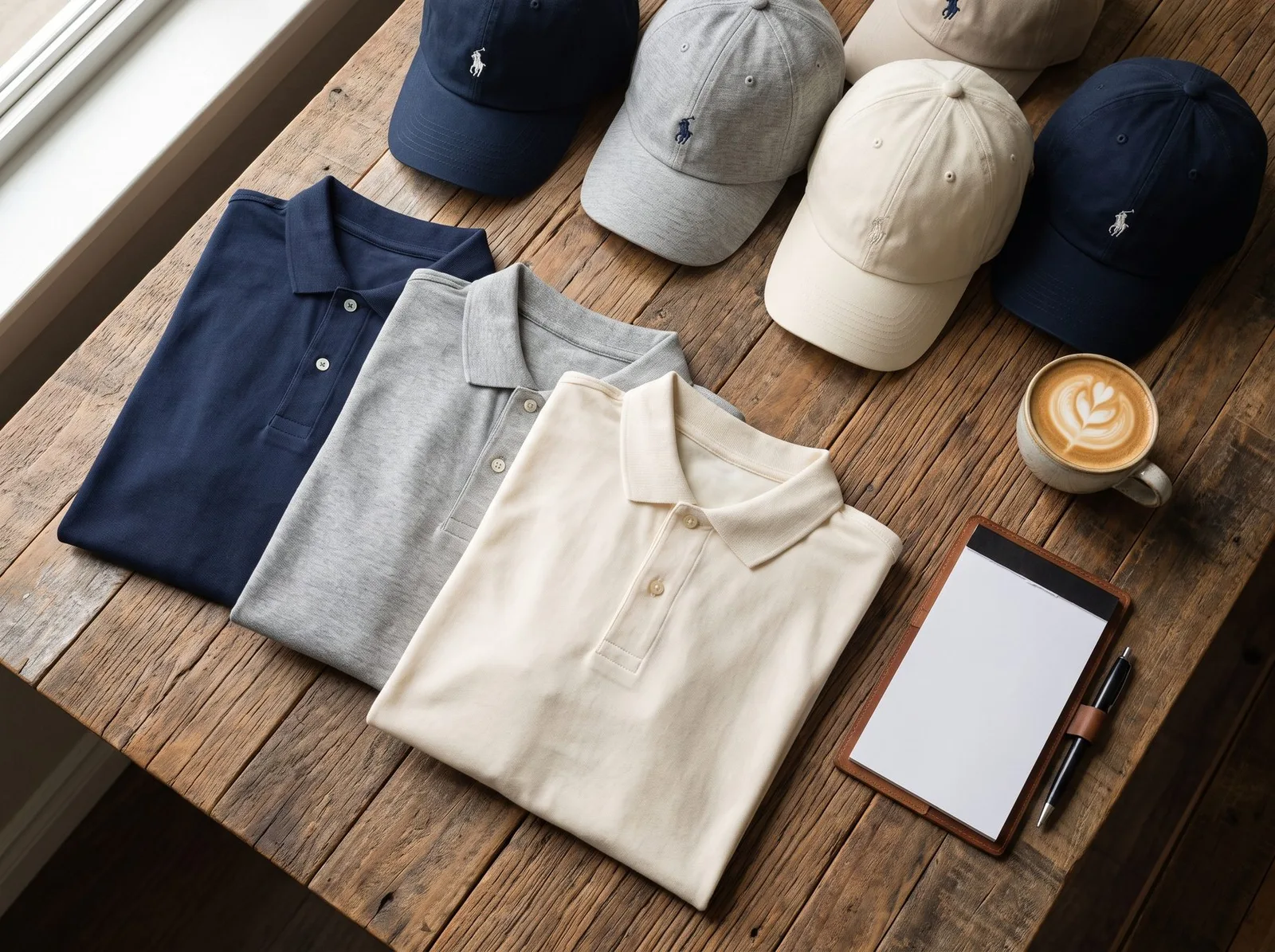
For logo color matching on custom apparel, send your brand’s color references and the exact garment color, then confirm the provider’s matching process. A screen image helps communicate the design but cannot establish the final fabric result. When color is critical, ask about a physical print sample or thread swatch before production.
Separate the garment color from the logo color
‘Navy shirts with our blue logo’ describes two color decisions. Record the garment manufacturer’s color name and style number separately from the logo’s color reference. A garment label and a print reference do different jobs. Neither establishes that the finished garment and decoration will look identical.
For an illustrative staff order, you might use a navy polo with an embroidered logo and a navy tee with a screen-printed logo. Start by deciding whether the important requirement is a close visual match across garments, a specified ink reference, or a consistent approved sample for each product. Tell the provider which matters most.
Send a color brief the provider can use
- The source artwork and a version number or file date.
- Your brand color references, including the named color system when available.
- The exact garment style and manufacturer’s color name.
- The decoration method and finished dimensions.
- A note identifying the colors that are critical to approval.
- Any physical sample you want the provider to use as a reference.
If your only reference is a hex code, say so. Ask how the provider will translate that screen color into its production process. Do not silently assume that a web color value names a ready-mixed ink or a thread color.
How do screen-printing color references work?
Ask whether the provider offers ink matching, which reference system it uses, and whether a matching charge applies. Custom Ink’s color matching guidance shows that Pantone references can be used in an ordering process. Its specific charges and workflow belong to Custom Ink; your local provider must confirm its own terms.
Confirm the garment color and whether the provider’s proposed ink treatment includes an underbase. Request a sample on the intended garment when the result is critical. Paper, a screen mockup and the finished fabric give you different views of the design.
Our screen-printing service guide explains when to discuss that method. If full-color artwork is involved, compare it with DTF printing and ask how each provider checks the final color.
Can DTF, DTG and embroidery look exactly alike?
Treat exact agreement as something to test, not something to promise from artwork alone. Ink, transfer material and thread produce different surfaces. Ask for an approved example for each method you plan to order, especially if the pieces will be worn together.
For embroidery, record the thread brand and color references chosen by the provider. Review a swatch or stitched sample when possible. Thread selection belongs alongside the digitizing and proof approval checklist, because the logo shape and its colors are approved together.
On polyester garments, ask whether heat-applied decoration needs a dye-migration test. The STAHLS dye migration handbook describes this production concern. A provider’s test on your selected fabric is more useful than assuming that all garments of the same color behave alike.
Use a sample approval record
| Record | Example of the information needed |
|---|---|
| Garment | Brand, style, manufacturer color and size of sample |
| Artwork | Approved file version and decoration dimensions |
| Production colors | Ink references or thread brand and color numbers |
| Sample | Physical sample reference or clearly identified proof |
| Approval | Who approved it, when, and any agreed exceptions |
Keep the physical reference if you have one. If you approve a photograph, record that limitation and ask about the lighting and any difference from the finished item. Avoid adjusting your artwork repeatedly to match the appearance of one phone screen.
What should you do when the sample looks wrong?
Describe the difference specifically: too dark, too warm, low contrast against the garment, or inconsistent between the two products. Refer to the agreed physical sample or color reference. Ask which change the provider proposes and whether it affects cost or timing. Approve the revised sample before the production run.
If exact color matching is essential for your brand, state that in the first request. It may affect the suitable method, provider and proof process. If a close standard color is acceptable, say that too; the provider can quote against the actual requirement.
Keep the approved color information for your next order
Save the garment specification, artwork version and production color references together. Our reorder record guide explains how to carry those decisions into a later batch. A saved screenshot alone leaves important information out.
Request a provider match with your logo and color requirements. The matched provider confirms which references, samples and matching options it can offer before you approve production.