
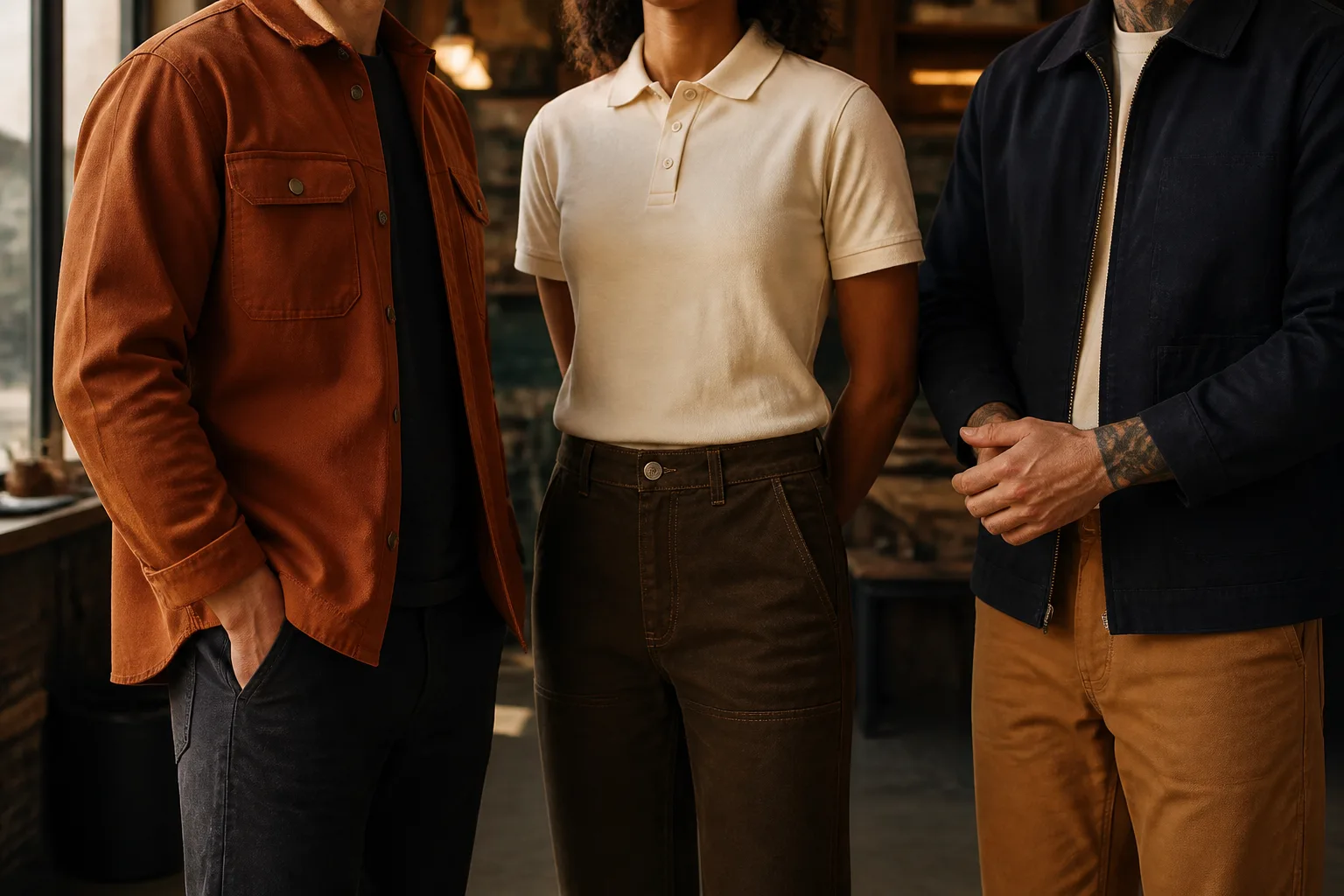
To reorder custom apparel, send the original order reference, exact garment style and color, approved artwork, decoration dimensions and new size quantities. Ask the provider to confirm stock, setup reuse and any proposed substitutions. A small reorder needs its own quote and approval, even when the design has not changed.
‘The same shirts again’ is not a complete specification
A new employee needs two polos. You find an old photo, but it does not show the garment style number, logo dimensions or thread reference. The next order starts with guesswork. Keep an order record while those details are still available.
Custom Ink’s reorder instructions identify the original order number and new size information as useful inputs. That is its ordering workflow; ask your own provider which reference it uses to retrieve production details.
Create one order record you can hand to another buyer
| Category | Details to keep |
|---|---|
| Provider | Contact, order reference and approval date |
| Garment | Manufacturer, style number, color, fabric and fit |
| Artwork | Source file, approved version and logo dimensions |
| Decoration | Method, placement, ink or thread references |
| Proof | Approved proof and physical sample reference if available |
| New quantity | Exact units by size, with individual names if relevant |
| Commercial terms | Setup reuse, minimum quantity, fulfillment and correction terms |
Store the artwork as a file, not just an image embedded in an email. Give versions plain names that indicate whether they are approved. An updated slogan or a resized chest logo is a design change even when most of the artwork looks familiar.
Why can a small reorder cost more per shirt?
A repeat design does not make a repeat quantity. Ask whether setup work is reused and whether the smaller batch changes the decoration cost or minimum. Do not assume the unit price from a large order remains available for two or five replacements.
Compare the actual new quote using the apparel quote worksheet. Include all proposed setup, garment, decoration and delivery charges. If the provider suggests a different method for a small quantity, review both its cost and the expected appearance next to the existing garments.
Can an embroidery file be reused?
Ask the provider whether it retains the approved file and whether the new garment, size and technique are compatible with it. Printful explains reuse for the same embroidery type in its embroidery file guidance. That illustrates a reuse condition, not a promise that every provider stores files indefinitely or releases them to other shops.
If a new garment has a different fabric or construction, request a review. Use the embroidery proof checklist when a fresh sample is needed. Confirm whether that review or any required redigitizing changes the quote.
Handle discontinued styles and substitutions explicitly
Ask the provider to confirm current stock before approving production. If the exact garment is unavailable, ask for the named alternative, fabric, fit, size chart and manufacturer’s color name. Compare it with the original product. A substitute can be sensible, but it should be an informed choice.
For customer-facing staff, decide whether you need a close match with existing uniforms or whether a planned transition to a different style is acceptable. For field crews, confirm the practical features you still need, such as pockets or layering room. Do not approve a substitute solely because both catalog descriptions say ‘polo.’
Keep a clear note of the substituted style so the following order does not accidentally switch back. Our uniform program checklist covers the broader ongoing ordering process; this record focuses on reproducing an already approved specification.
Check color and placement against the original approval
An old garment can have changed through wear and washing. Tell the provider whether you want to match the original approved sample or the current worn garment. Those are different references. Retain a clean approved sample when practical, and identify it clearly in your records.
Share the original decoration dimensions and placement reference. If the old order included several sizes or garment cuts, confirm how the provider handles placement across the new size mix. Our logo color matching guide explains how to record production color references.
A message template for a small staff reorder
‘Please quote a reorder against order [reference]: [style and color], [size quantities], using approved artwork [version] at [dimensions and placement]. We need the finished items by [date] at [ZIP code or pickup location]. Confirm garment availability, setup reuse and any change from the original specification before production.’
If you are contacting a different provider, add what files and samples you actually possess. Be clear when the original stitch file or ink information is unavailable. That allows the new provider to quote any preparation instead of discovering the gap after approval.
Request a provider for repeat business apparel
Explore business uniform matching and send your reorder specification. Indy Custom Apparel connects you with an independent provider. File retention, product availability, proofing, pricing and delivery are confirmed directly with the provider handling your order.